Se advierte al usuario del uso de cookies propias y de terceros de personalización y de análisis al navegar por esta página web para mejorar nuestros servicios y recopilar información estrictamente estadística de la navegación en nuestro sitio web. Puede cambiar su configuración u obtener más información.

aceptar
cerrar

Obesity treatment

Discover the best treatment for you

  • More than 1,500 satisfied patients
  • Pioneering bariatric center in Spain with 16 years of experience
  • Expert surgeons led by Dr. Jose Vte. Ferrer
  • Personalized follow-up by a highly qualified team

Discover the best treatment for you

At Clinicas Obésitas we are exclusively dedicated to treating obesity. We are pioneers in Spain in bariatric surgery, we have the most advanced technology and we offer mini-invasive treatments of maximum safety and fast recovery.

  • More than 1,500 satisfied patients
  • Pioneering bariatric center in Spain with 16 years of experience
  • Expert surgeons led by Dr. Jose Vte. Ferrer
  • Personalized follow-up by a highly qualified team

Highly specialized clinic in:

Each patient is different and has their own needs. In Obésitas Clinics everything revolves around the patient: the most appropriate operation, a team of highly recognized professionals, formed by the most expert surgeons and pioneers in bariatric surgery, psychologists and nutritionists specialized in obesity, who will accompany you throughout the process. / p>

Here are our obesity treatments , find out which one best suits your case.

A very effective and safe bariatric surgery. Suitable for patients with BMI between 35 and 45, who are not large peckers and/or candy eaters. Patients must change their dietary habits and lifestyle.

It’s the most proven operation in bariatric surgery. Suitable for patients with BMI over 45, and large snackers and / or candy eaters, and obese people with diabetes who require insulin.

Our data is backed up

Operations
0
Patients
0

20

Mortality rate

Specialists
0

Extensive experience in:

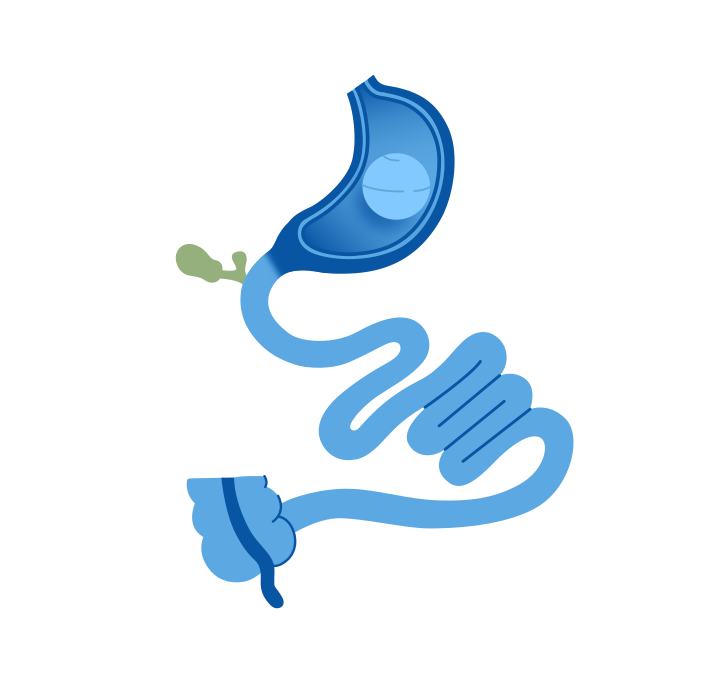
Safe and effective method. Occupies the light of the stomach with a ball, reducing its capacity. Suitable for patients with BMI between 28 and 35, and always associated with a multidisciplinary work.

Psychological and nutritional treatment that will help you lose weight and not regain it through changing your habits. Aimed at patients who are 5 to 15 kg overweight.

Mini-invasive surgery, indicated in patients with Diabetes Mellitus type II (adult) and moderate obesity (BMI from 30 to 35)

Bariatric surgery for patients who have already undergone surgery for obesity, but have not achieved the necessary result.

Simplified, mini-invasive surgery without gastric section More dependent patient. For obesity of 35 to 40 BMI, large dining rooms, no pecking. Under clinical supervision.

“Stomach reduction without surgery.” Allows the reduction of the stomach capacity by means of an endoscopy. Durability 18-24 months.

By mini-invasive laparoscopy and without hospital admission (general anesthesia is necessary). It is recommended when the gastric band has failed, to avoid long-term damage.

Equipo_nuevo_SeguimientoMulti

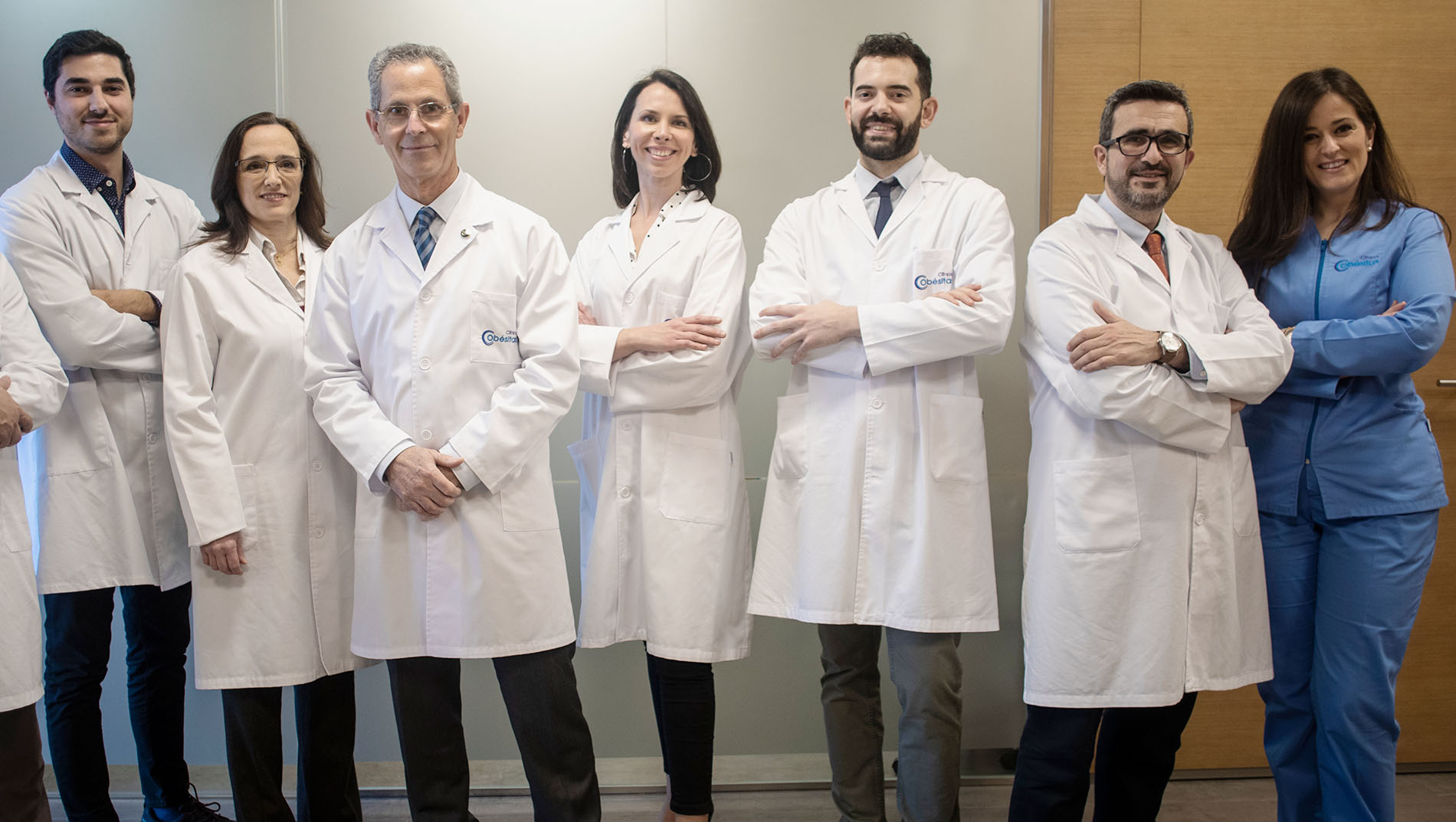
Multidisciplinary follow-up by an expert team

Multidisciplinary follow-up aims to ensure the success of long-term patient surgery. To do this, our professionals will perform the following functions:

    • Evaluation and medical follow-up by the bariatric surgeon
    • Evaluation and dietary follow-up by the nutritionist
    • Cognitive-behavioral therapy by the psychologist.

Plastic surgery after obesity

Other surgeries

How we organize an operation

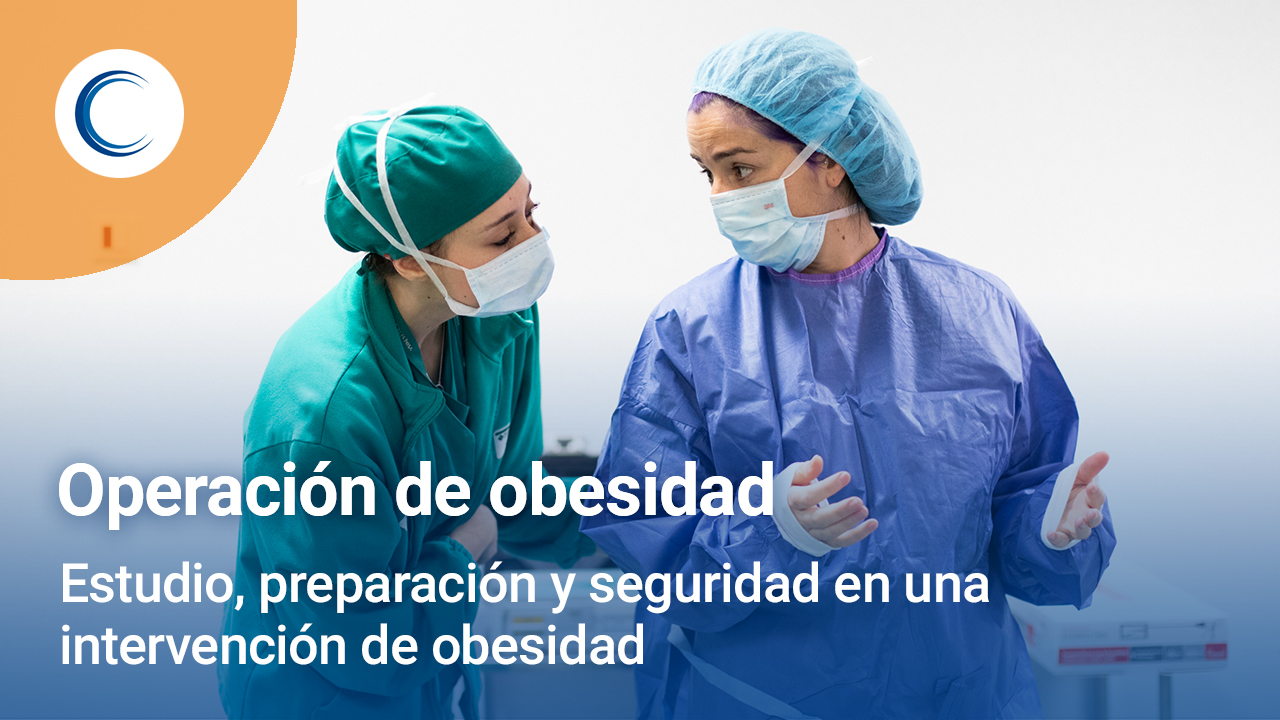
On TV Mediterráneo we talk about the study, preparation and safety in an obesity intervention.

Patient Resources

What treatment do I need?

Find out in 3 simple steps the most appropriate treatment to reduce your weight in the most healthy and physiological way possible.

Learn about all obesity interventions and see their characteristics, results, benefits and risks in a comparative way.

We show you in detail the different prices of all our obesity treatments according to the Obésitas center where we treat you.

Treatments · Revision, metabolic and other techniques

Other obesity treatments

As well as the gastric sleeve and bypass, we treat specific situations and offer less invasive alternatives. Here we explain what revision surgery, diabetes surgery, the gastric balloon, gastric plication and the Apollo method involve, and who they are for.

  • Revision surgeryfor patients who have already had surgery
  • Diabetes surgerymetabolic bypass
  • Gastric balloonnon-surgical, outpatient
  • Multidisciplinaryfollow-up
Revision surgery after a previous obesity operation

Revision surgery

This is surgery for people who have already had obesity surgery but have not achieved the result they need. Every operation has a certain failure rate, which is low when the patient has been properly assessed, the operation is well chosen and the recommendations are followed. Because of its complexity, it should only be performed by a well-established, specialised team.

When it is needed

  • Weight regain after obesity surgery.
  • Insufficient weight loss after a gastric sleeve or gastric bypass.
  • Complications of a gastric band.

The preliminary assessment

The first step is a multidisciplinary assessment to identify why the previous operation failed. Depending on the case, the options considered are restoring the original operation (more common with bypass), changing technique (more common with the sleeve) or removing the band and changing technique.

What options are there?

Previous operationSituationRevision option
Gastric bandBand complicationsLaparoscopic removal of the band
Gastric bandInitial BMI below 45, no frequent snacking or sweets; lost weight but regained itBand removal and gastric sleeve in a single operation
Gastric bandInitial BMI above 45, with frequent snacking and sweets; lost little or no weightBand removal and gastric bypass in a single operation
Gastric sleeveVery high initial BMI, over 55Conversion to SADI-S bypass
Gastric sleeveLarger stomach capacity after years of overeatingConversion to gastric bypass
Gastric bypassNo feeling of fullness and greater intake capacity over the yearsAdjustable gastric band over the bypass stomach
Gastric bypassSnacking, frequent sweets and disordered eatingConversion to long-limb bypass, with more malabsorption

A gastric band should be checked at least every 3 years, or sooner if vomiting or discomfort occurs, and should only be adjusted by a specialist. After removal without further surgery, the hospital stay is about 24 hours and normal life resumes in about 48 hours.

How it is performed

  • Preparation: multidisciplinary assessment (can be done remotely), pre-operative diet, exercise, optimisation of medical treatment, pre-operative tests and appointments with the anaesthetist and the surgeon.
  • Operation: laparoscopic, with minimally invasive anaesthesia, in a single operation, taking 120–150 minutes in theatre. It is performed by Dr Ferrer and his team, following ASMBS recommendations.
  • Fast Track protocol: no ICU; the patient gets up and walks after 2 hours, drinks fluids within a few hours and is discharged in 24–48 hours, depending on their progress.

Recovery and follow-up

  • Daily walks and an active but relaxed life.
  • Liquid diet in the first week, progressing to a normal diet by 4 weeks.
  • Skin stitches removed after 7–9 days and return to work in 7–9 days.
  • Do not lift more than 15 kg for 4–5 weeks.
  • 24-month multidisciplinary follow-up with surgeon, dietitian and psychologist, including nutritional blood tests.

Cost

  • Gastric band removal without further surgery: €5,400.
  • Change of operation due to failure: the same price as the operation to be performed.
  • 2-year multidisciplinary follow-up: €950.

Prices for the Valencia and Madrid clinics. They include pre-operative assessment and preparation, laparoscopy with the Fast Track protocol, surgical team fees, hospital costs, hospital follow-up and an emergency phone line. Specific preparatory tests are not included. Financing available for up to 5 years.
Metabolic surgery for type 2 diabetes

Diabetes surgery

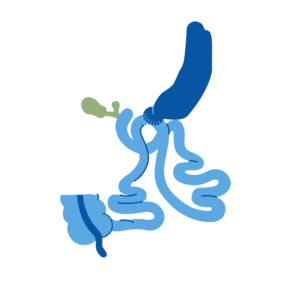
Also known as metabolic bypass. It is a bypass aimed at type 2 diabetes in selected patients, always as part of specialist medical follow-up. It can improve glucose control and reduce the need for oral diabetes drugs and insulin, as well as improving hypertension, cholesterol, triglycerides and uric acid in the medium term.

Type 2 diabetes worsens slowly and without symptoms at first. That is why it is advisable to consider treatment before complications appear.

How it acts on diabetes

  • Immediate hormonal effect: by preventing food from passing through the first section of the intestine, close to the pancreas, it improves the regulation of gut hormones and the action of insulin.
  • Glucose and insulin resistance fall within a few days, quickly reducing the need for medication.
  • Sustained effect: the loss of weight and visceral fat reinforces and maintains this improvement.

Technique

We currently use the SADI-S-type technique: a gastric sleeve that preserves the valves and nerves of the stomach, joined to the ileum by a single connection below the pylorus. It is more physiological than the classic bypass, with a lower risk of iron, folic acid and vitamin B12 deficiency and fewer ulcers and internal hernias. On the other hand, it is technically more complex and requires careful attention to diet because of its greater malabsorption.

Who is it for?

  • People aged 25 to 65.
  • BMI above 29 and below 40.
  • Type 2 diabetes diagnosed less than 10 years ago.
  • Increasing need for oral diabetes drugs or insulin.
  • Poor control despite medical treatment and appropriate habits (high glucose and glycated haemoglobin).
  • Unfavourable progression, with complications appearing.

The indication is always individual and is made after assessment by the medical team.

How it is performed

  • Preparation: multidisciplinary assessment (can be done remotely), pre-operative diet, exercise, optimisation of medical treatment, pre-operative tests and appointments with the anaesthetist and the surgeon.
  • Operation: laparoscopic or Da Vinci robotic surgery, without opening the abdomen, taking 120–150 minutes in theatre.
  • Fast Track protocol: admission on the day of the operation, no ICU; the patient gets up after 2 hours, drinks fluids within a few hours and is discharged in 24–48 hours.

Recovery and follow-up

  • Subcutaneous heparin for 20 days to prevent thrombosis and a one-hour walk every day.
  • Liquid diet in the first week, progressing to a normal diet by 4 weeks; after that, five meals a day and no snacking.
  • Stitches removed after 7–9 days and return to work in 7–15 days, without lifting more than 15 kg for 4–5 weeks.
  • Daily vitamin supplements for life.
  • 24-month multidisciplinary follow-up with surgeon, dietitian and psychologist, including nutritional blood tests and an emergency phone line.

Risks

They are those of bypass surgery: immediate complications (thrombosis, embolism, fistula or bleeding) are uncommon. In the medium term, the greater malabsorption means diet must be watched carefully, and too many sweets or fats can cause diarrhoea or discomfort.

Cost: available on request at the Valencia and Madrid clinics. 2-year multidisciplinary follow-up: €950.

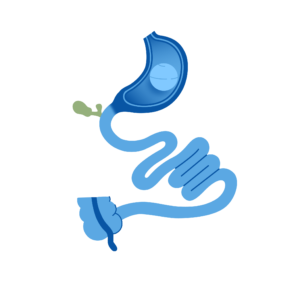
Gastric balloon inside the stomach

Gastric balloon

This is a balloon placed inside the stomach that takes up part of its volume to create a feeling of fullness and help control food intake. It is a minimally invasive procedure, with no surgery and no hospital stay. Its effectiveness depends on a multidisciplinary programme and on the patient's motivation to change their habits. We have treated more than 500 patients with this technique.

Types of balloon

Endoscopic balloon

  • It is placed by endoscopy under sedation, in about 15–20 minutes and without a hospital stay.
  • It is filled with up to 700 cc of saline.
  • It is removed by endoscopy after 6 or 12 months, or sooner if the expected weight is reached or two months go by without weight loss.

Swallowable balloon

  • It is swallowed as a capsule with sips of water, under X-ray guidance, without sedation or endoscopy.
  • It is filled with 550 cc of saline.
  • It stays in place for about 4 months: its valve opens at around 16 weeks and it passes out naturally in the stool.

How it works

  • It produces early satiety and reduces portion sizes.
  • It slows stomach emptying, so the feeling of fullness lasts throughout the day.
  • It helps reduce cravings between meals and breaks the hunger–anxiety–hunger cycle.

Who is it for?

  • Patients with a BMI between 30 and 34 who have not succeeded with non-interventional methods.
  • Who are willing to change their eating habits and lifestyle.
  • Compared with surgery, the balloon is preferable with a BMI below 35 and no associated conditions.

How it is performed

Preparation

  • Stomach protector during the previous 5–7 days, as prescribed by the doctor.
  • Liquid diet for the previous 24 hours and 8 hours of fasting.

Placement and removal

  • Placement: through the mouth, under sedation administered by the anaesthetist, in about 10–20 minutes. The balloon is filled with saline and methylene blue. No hospital stay is required and the patient goes home, preferably accompanied.
  • Removal (endoscopic balloon): by endoscopy under sedation, in about 10 minutes. The balloon is emptied and removed through the mouth.

The first days and diet

  • The first 24–48 hours are a period of adaptation, supported by medication.
  • Nausea is common in the first 2–3 days and improves with treatment.
  • During the first 3 weeks, food texture progresses: rehydration in the first 48 hours, then liquids, purée and a soft diet.
  • From the first month, a healthy diet guided by the dietitian and adapted to the stomach's reduced capacity.

Multidisciplinary follow-up

For 12 months: medical follow-up by the bariatric surgeon, dietary follow-up by the dietitian and cognitive behavioural therapy with the psychologist, with a 24-hour helpline and clinical and ultrasound monitoring.

Results and outcomes

Our own study

  • 520 patients, mean age 35.1 years (77.7% women / 22.3% men).
  • Mean initial BMI: 34.7 kg/m². At 18 months: 30.2 kg/m².
  • The balloon is very effective between months 1 and 4; its effect is smaller in months 5 and 6.
  • Two years after removal, those who achieved the expected weight loss regain between 5% and 10% of the weight lost. Those who do not achieve it tend to regain weight more easily.

Possible discomfort and effects

  • Nausea in the first few days; after that, mainly a lack of appetite and a feeling of "something" in the stomach.
  • In the long term there may be some stretching of the stomach, especially the fundus, which generally recovers to a large extent with no functional impact, although it can worsen a hiatus hernia.

Weight is only maintained if the habits learnt during the treatment are kept up.

Cost

Endoscopic balloonValenciaMadrid
Up to 6 months€3,700€3,800
Up to 12 months€4,500€4,600

Includes prior assessment, fees, 24-hour helpline, balloon, hospital costs, ultrasound or X-ray monitoring if needed and multidisciplinary check-ups for 12 months. Financing available for up to 5 years.
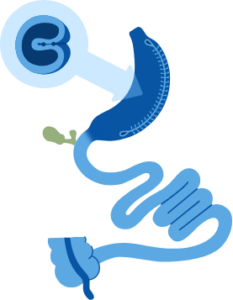
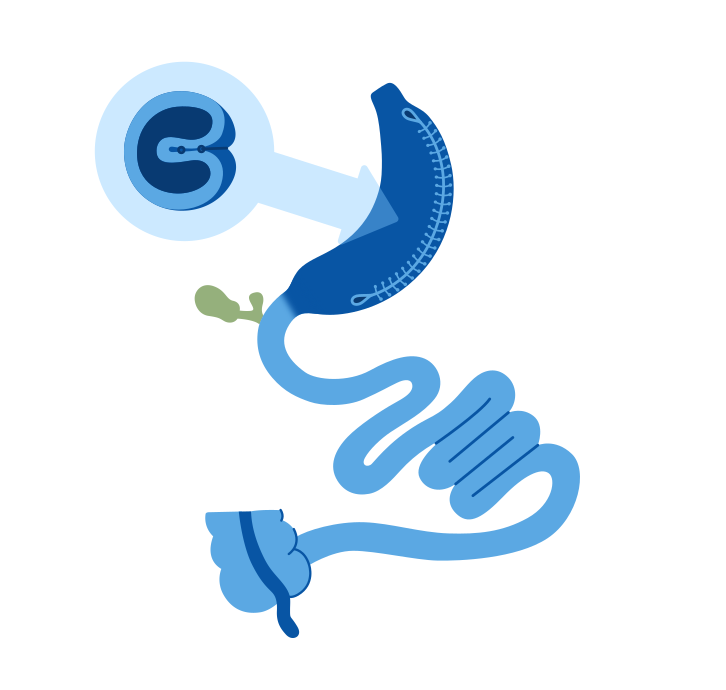
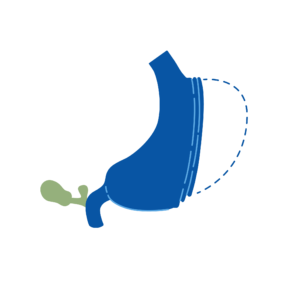
Diagram of gastric plication

Gastric plication

We do not currently perform this technique. It has fallen out of use because of its limited long-term effectiveness and high rate of weight regain. We describe it for information purposes only; for moderate obesity we consider other options, such as the gastric sleeve.

It involves folding the greater curvature of the stomach inwards to reduce its capacity by around 80%, without cutting or removing any part of it.

How it is performed

  • Performed by minimally invasive laparoscopy under general anaesthesia, in about 60–90 minutes.
  • The greater curvature is freed from its attachment to the omentum (the "apron" of fat in the abdomen).
  • The stomach is folded with two layers of stitches: the first creates most of the fold and the second protects the first.
  • The folds are secured with permanent, non-absorbable sutures.

How it works

  • The patient feels full with a small amount of food.
  • The stomach loses its ability to stretch, which limits excessive intake.

Who it was indicated for

  • Obesity that was not very advanced: BMI between 35 and 40.
  • With a BMI between 31 and 35, only if there were diseases that would improve with weight loss and after a detailed assessment.
  • Profile: big eaters, with little snacking and few sweets, able to lead an active life, with little family history of obesity, or high-risk patients who needed a simple operation.

Advantages and disadvantages

Advantages

  • Normal digestion and absorption of nutrients.
  • No dietary supplements required.
  • Requires a change in habits, with about 5 meals a day.

Disadvantages

  • Repeated excessive intake can open part of the plication and increase the stomach's capacity again.
  • In 10–15% of cases, the stitches may come loose in the fundus area if the patient overeats or vomits.
  • Requires limiting food quantities for life and continued clinical supervision.
  • Compared with the gastric sleeve: greater risk of stretching, less reduction in ghrelin and less long-term weight loss.

Recovery and results

  • Fast Track protocol: room without ICU, walking after 2 hours, fluids within a few hours and discharge after about 24 hours.
  • Liquid diet for about 10 days, progressing until the fourth week, when the patient moves on to a normal diet.
  • Stitches removed after 8–9 days and return to work in about 7 days, without lifting more than 15 kg for 4–5 weeks.
  • 24-month multidisciplinary follow-up with bariatric surgeon, dietitian and psychologist.

Our own study

  • 21 patients, mean age 38.96 years (85.7% women / 14.3% men).
  • Mean initial BMI: 35 kg/m². At one year: 27.4 kg/m².
Diagram of the Apollo method

Apollo method

We do not currently perform the Apollo method. We have replaced it with less invasive medication treatments with medical follow-up. We describe it for information purposes only.

Also known as endoscopic gastric plication or Endo-Sleeve. It reduces the capacity of the stomach by means of an endoscopy, without incisions or surgery, by folding the fundus and body of the stomach.

How it is performed

  • Performed by gastroscopy (a tube inserted through the mouth), under general anaesthesia and in an operating theatre, because of its duration and technical difficulty: about 60–90 minutes.
  • Rows of stitches are placed joining the front and back walls of the stomach, leaving it tube-shaped.
  • The suture material resists the action of stomach acid.
  • Hospital stay of about 12–14 hours with clinical monitoring.

A temporary treatment

  • Its effect lasts between 18 and 24 months. Over time the stitches come loose and the stomach returns to its previous size; it may last longer if the patient avoids excessive intake.
  • As the greater curvature is not freed, the fold is not as neat as in laparoscopic plication, and bacterial overgrowth or gastritis requiring treatment may occur.
  • This period is used to lose weight, learn a healthier relationship with food and start doing physical activity. After that, the result depends on maintaining these changes.

Who it was indicated for

  • BMI over 30 without stable weight loss after a well-followed diet supervised by a specialist.
  • BMI over 35 in patients who did not want surgery for the time being.
  • Only in patients able to commit indefinitely to changes in diet and lifestyle.

Contraindications and risks

  • It is not performed if there is an active ulcer, significant gastritis, hiatus hernia or oesophagitis.
  • Risks: those of anaesthesia and possible gastric bleeding from the stitches.

Advantages and disadvantages

Advantages

  • No surgery or incisions.
  • Lower theoretical risk than laparoscopic plication.
  • The initial weight loss makes it easier to resume physical activity.

Disadvantages

  • It is not permanent: its effect lasts about 18 months.
  • Requires general anaesthesia and an operating theatre.
  • It can cause bacterial overgrowth or gastritis.
  • Requires long-term commitment from the patient.

Recovery and results

  • Preparation: stomach protector during the previous week, liquid diet for the previous 24 hours and 8 hours of fasting.
  • Fast Track protocol: the patient gets up after 2 hours, drinks fluids after 4 hours and is discharged in 12–14 hours.
  • Normal life in 24–48 hours and return to work in about 7 days, without lifting more than 15 kg for 4–5 weeks.
  • Liquid diet in the first week and normal diet by 4 weeks.
  • Multidisciplinary follow-up with bariatric surgeon, dietitian and psychologist.
  • Average loss of between 45% and 70% of excess weight. Results vary and depend on commitment to the programme.

Which treatment is right for you?

Request a personalised preliminary study. We will provide a medical assessment and recommendation with no obligation.

Start my personalised study

Frequently asked questions

Which patients is revision surgery performed on?

On people who have already had obesity surgery but have not achieved the result they need: because of weight regain, insufficient weight loss after a sleeve or bypass, or complications of a gastric band. The cause of the failure is first studied in depth in order to choose the best option.

How much does revision surgery cost?

Removing a gastric band without further surgery costs €5,400. If the operation is changed because of failure, the price is the same as that of the operation to be performed. The 2-year multidisciplinary follow-up costs €950.

Who can have diabetes surgery?

People aged 25 to 65, with a BMI between 29 and 40 and type 2 diabetes diagnosed less than 10 years ago, who need more and more medication or insulin or have poor control despite treatment. The indication is always individual.

What technique is used in diabetes surgery?

Currently, the SADI-S-type technique: a gastric sleeve with a single connection between the duodenum and the ileum. It is more physiological than the classic bypass and carries a lower risk of iron, folic acid and vitamin B12 deficiencies.

Which is better, the balloon or surgery?

It depends on the individual assessment, BMI and associated conditions. The balloon is preferable with a BMI below 35 and no associated conditions; bypass, in severe obesity with diabetes or a BMI over 45.

Is the gastric balloon uncomfortable?

Nausea is common in the first few days and improves with medication. After that, what you mainly notice is a lack of appetite and a feeling of "something" in the stomach.

Will I feel hungry when the balloon is removed?

No. The stomach stretches back gradually and there is no feeling of emptiness when it is removed.

How long does the balloon stay in?

The swallowable balloon, about 4 months; the endoscopic balloon, 6 or 12 months. Follow-up with the team lasts 1 year.

Can I regain weight after the balloon?

Yes. It can only be avoided by keeping up the habits learnt during the treatment.

Can a second balloon be placed?

Yes, after waiting 3–4 months, although it is usually less effective than the first.

Why don't you perform gastric plication any more?

Because it has fallen out of use due to its limited long-term effectiveness and high rate of weight regain. For moderate obesity there are options with better results, such as the gastric sleeve.

Is the Apollo method surgery?

No. It is an endoscopic procedure, although it is performed under general anaesthesia in an operating theatre. We do not currently perform it: we have replaced it with less invasive medication treatments.

Is the Apollo method permanent?

No. Its restrictive effect lasts up to about 18 months; after that, the stitches come loose and the stomach returns to its size. That is why it is key to use this time to change habits permanently.

What is the difference between the Apollo method and laparoscopic gastric plication?

Laparoscopic plication is performed laparoscopically: it first frees the greater curvature of the stomach and creates a double fold with permanent stitches, so it is considered permanent. The Apollo method is performed by endoscopy, does not free the greater curvature and is temporary.

Clínicas Obésitas
Privacy Overview

This website uses cookies so that we can provide you with the best user experience possible. Cookie information is stored in your browser and performs functions such as recognising you when you return to our website and helping our team to understand which sections of the website you find most interesting and useful.