Se advierte al usuario del uso de cookies propias y de terceros de personalización y de análisis al navegar por esta página web para mejorar nuestros servicios y recopilar información estrictamente estadística de la navegación en nuestro sitio web. Puede cambiar su configuración u obtener más información.

aceptar
cerrar

Tenemos una experiencia acumulada de más de 700 pacientes intervenidos de Bypass Gástrico por laparoscopia en los últimos 15 años bajo los más altos estándares internacionales de seguridad”

1- Una operación pionera:

Después de años de formación y seguimiento de los últimos avances, realización del “Bypass tipo SADIS”, que aúna las conocidas ventajas del Sleeve o Manga Gástrica, con una derivación duodeno-ileal de una sola anastomosis. Con todo, se consigue una operación más fisiológica y que aporta muy buena calidad de vida. Puede decirse que es la técnica más fisiológica de todas las que existen smn cirugía bariátrica.

2- Una técnica segura y eficaz en nuestras manos:

Nos avala:

  • Una larga formación y experiencia: somos cirujanos con catalogación de expertos en cirugía barbárica.
  • Preparación preparatoria minuciosa.
  • Utilizamos la mejor tecnología: Cirugía Robótica vs  Laparoscopia Mini-invasiva.
  • Protocolo Fast Track de rápida recuperación postoperatoria: Ingreso 24 – 48 horas.
  • Rápida reincorporación a las actividades cotidianas según evolución clínica del paciente.

Nuestra técnica quirúrgica, segura y depurada:

  • Utilizamos la técnica manual, para la confección de las anastómosis o uniones entre intestinos. Es la técnica mas exigente y que requiere mas experiencia y formación como cirujano, pero también la mas segura: Menor incidencia de fugas o fístulas. Menor incidencia de úlceras y menor incidencia de dilatación a largo plazo. (1)
  • Hasta la actualidad, no hemos tenido ningún caso de fuga en nuestra técnica de Bypass Gástrico y 1 caso en el Bypass SADIS, que hubo resolver satisfactoriamente..

3- Un equipo quirúrgico experto y minucioso:

La operación la realiza el Dr. Ferrer, cirujano cualificado como «Experto en Cirugía De la Obesidad», acompañado por un equipo de cirujanos con larga trayectoria profesional en la cirugía de la obesidad, expertos y estable, siguiendo las recomendaciones de la ASMBS.

(1) The single anastomosis duodenal switch modifications: a review of the current literature on outcomes. Surg Obes Relat Dis. 2017 Aug;13(8):1306-1312. doi: 10.1016/j.soard.2017.04.027.

Treatments · Obesity surgery

SADI-S bypass

Sleeve gastrectomy + duodeno-ileal bypass. It is a technique derived from the gastric sleeve that achieves a more physiological bypass: a small stomach that still works normally and a single intestinal connection.

  • Sleeve + intestinalbypass
  • Controlledreduced absorption
  • 24–48 hhospital stay, no ICU
  • 24 monthsof multidisciplinary follow-up
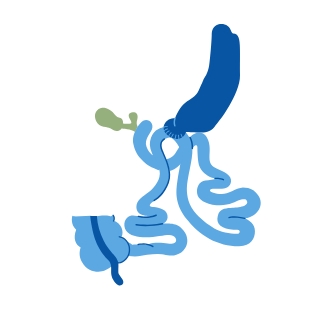
Diagram of the SADI-S bypass

Treatment overview

The SADI-S bypass (sleeve gastrectomy + duodeno-ileal bypass) is a technique derived from the gastric sleeve that achieves a more physiological bypass, with fewer potential adverse effects. It combines two components:

  • A gastric sleeve: the stomach is shaped into a tube. The fundus, the area that produces most of the ghrelin, is removed, while the entry valve, the exit valve (pylorus), the arteries and the nerves are preserved. The result is a small stomach that still works normally.
  • A duodeno-ileal bypass: the intestine is joined below the stomach's exit valve, bypassing the small intestine at about 300 cm from the caecum. It is a single connection, with no crossing of intestinal loops.

How it produces weight loss

  • Restriction: the tube-shaped stomach holds less and produces intense satiety.
  • Hunger control: because the fundus is removed, ghrelin falls more than with traditional gastric bypass.
  • Controlled malabsorption: bypassing the intestine reduces calorie absorption; its malabsorptive power is slightly greater than that of gastric bypass.
  • Physiological digestion: because the pylorus is preserved, the stomach continues to empty naturally.

Advantages and disadvantages

Advantages

  • It is more physiological: the stomach keeps working as it should.
  • Ghrelin falls more than with gastric bypass.
  • Lower likelihood of problems absorbing iron, folic acid and vitamin B12.
  • It avoids ulcers at the gastro-jejunal connection.
  • It minimises the likelihood of internal hernias.
  • Completely normal life: all kinds of food are tolerated.

Disadvantages

  • Technically more complex: it should only be performed by highly experienced teams.
  • Greater malabsorptive power, which could lead to occasional problems.
  • Requires vitamin supplements and nutritional check-ups.

Why it is performed

SADI-S is indicated when the patient needs a technique with greater anti-obesity power and metabolic effect than the gastric sleeve. The indication is always made after a multidisciplinary assessment: surgical, nutritional, psychological and cardiological.

Who is a candidate?

  • Patients with a BMI over 45 kg/m².
  • Patients with a BMI between 40 and 45 who also have metabolic syndrome (diabetes, high cholesterol or triglycerides, hypertension) or an unfavourable metabolic or psychological profile.
  • People who snack compulsively or frequently eat sweets or fatty foods without control.
  • Patients with a significant family history of obesity.
  • Patients who have had a gastric sleeve with weight regain or insufficient weight loss, in whom the sleeve can be converted into a SADI-S.

Medical conditions it helps to treat

  • Improvement or resolution of type 2 diabetes and prediabetes.
  • Improvement of hypertension and of cholesterol and triglyceride levels.
  • Improvement of sleep apnoea.
  • Improved fertility, in both women and men.
  • Improved quality of life, vitality, mood and self-esteem.
How to prepare

Careful preparation reduces the risk of complications by around 25%. It includes:

  • Multidisciplinary assessment and preparation with a dietitian and psychologist.
  • Full pre-operative work-up: gastroscopy under sedation, abdominal ultrasound, blood tests, ECG and chest X-ray, plus any tests each patient requires.
  • Optimisation of medical treatment, especially of blood pressure and glucose.
  • Improving physical fitness: 1 hour of cardiopulmonary exercise a day and breathing exercises with an incentive spirometer.
  • Pre-operative weight loss with a diet lasting 1 to 6 weeks depending on the patient.
  • Appointment with the anaesthetist and with the surgeon.

The pre-operative diet

Always under medical and nutritional supervision. It reduces the size of the liver and abdominal fat and leaves a softer abdomen, which makes surgery easier and helps prevent thrombosis.

  • About 800 kcal a day, based on meal-replacement shakes and liquid meals, in 7 servings roughly every 2 hours.
  • No fizzy drinks, alcohol or caffeine.
  • Target weight loss: around 10% of starting weight.

What to expect

During the operation

  • Admission on the day of surgery.
  • Minimally invasive laparoscopy or Da Vinci robotic surgery, with minimally invasive anaesthesia and small incisions.
  • In the same procedure, the gastric sleeve is performed first, followed by the connection between the duodenum and the ileum.
  • As it is a more complex technique, it should only be performed by a highly experienced team.
  • The titanium staples, less than 1 mm in size, remain permanently and are well tolerated by the body.
  • The operation is performed by Dr Ferrer and his team, with extensive experience in obesity surgery, following ASMBS recommendations.

After the operation (Fast Track protocol)

  1. Private room, no ICU. The patient goes straight up to their room.
  2. After 2 hours they get up and walk.
  3. After 3 hours they drink fluids.
  4. Little discomfort. Oral medication for the first few days, breathing exercises and subcutaneous heparin for 20 days to prevent thrombosis.
  5. Discharge in 24–48 hours in standard cases.

Recovery

The first days and weeks

  • The small wounds heal in 2–3 days and stitches are removed after 7–10 days.
  • Daily walks in the morning and afternoon from discharge.
  • Do not lift more than 15 kg during the first 4–5 weeks.
  • Return to work in 7–15 days; for physically demanding jobs, from 4 weeks.
  • Intense exercise from 4–6 weeks.
  • Telephone contact with one of the surgeons and hospital follow-up during the first 30 days.

How your diet progresses during the first month

  • Days 1–10: liquid phase (broths, herbal teas, juices and protein shakes).
  • Days 11–17: semi-liquid phase (semolina, tapioca, blended soups with protein, skimmed dairy).
  • Days 18–24: purée phase.
  • Days 25–31: soft diet (cooked vegetables, soft rice or pasta, tender meat and fish, eggs, ripe fruit).
  • After the first month: normal, balanced diet in small amounts.

New eating habits

  • Five meals a day, eating slowly, sitting down and using small plates.
  • Protein at every main meal and a Mediterranean-style diet.
  • Avoid snacking between meals and fizzy drinks.
  • Avoid too many sweets and fats: they are poorly tolerated and cause loose stools.
  • You can eat everything, in suitable portions, and enjoy meals with others.

Supplements and nutritional check-ups

Because absorption is reduced, it is necessary to take vitamin supplements and have regular nutritional check-ups. As the stomach is preserved, the risk of iron, folic acid and vitamin B12 deficiency is lower than with gastric bypass. The team tailors the regimen to each patient.

Multidisciplinary follow-up afterwards

The aim of follow-up is to ensure the long-term success of the surgery. For 24 months, three professionals support the patient in a coordinated way:

Bariatric surgeon

Clinical assessment and follow-up. Telephone access during the first 30 days.

Dietitian

Nutrition education, regular blood tests and online support whenever needed.

Clinical psychologist

Cognitive behavioural therapy: relationship with food, impulses and expectations.

This is complemented by a patient support group and training workshops.

Follow-up schedule

  1. First 30 daysHospital follow-up and telephone contact with the surgeon
  2. First monthProgressive diet and removal of stitches
  3. 4–6 weeksReturn to intense exercise
  4. Up to 24 monthsConsultations with surgeon, dietitian and psychologist
  5. Long termSupplements and nutritional check-ups

Risks and complications

Immediate post-operative period

Immediate complications of bypass surgery (thrombosis, embolism, fistula or bleeding) occur in less than 1% of cases, and published mortality is below 0.35%. In our experience with SADI-S, there has been a single case of leak, which was resolved satisfactorily.

Medium and long term

  • Problems related to malabsorption: because it has somewhat greater malabsorptive power, occasional problems may occur, such as loose stools or nutritional deficiencies if the recommended diet and supplements are not followed.
  • Ulcers at the connection: as there is no connection between the stomach and the jejunum, the ulcers typical of gastric bypass are avoided.
  • Internal hernias: as there is a single connection, with no crossing of loops, the likelihood is minimised.

Most complications are uncommon and, in expert hands, are resolved with medical or surgical treatment.

Results

  • Greater weight-loss efficacy than traditional gastric bypass: around 85–90% of excess weight at 5 years.
  • Most of the weight is lost in the first 6–8 months.
  • Younger, more active patients achieve the best results. The quality of the technique and the team's support after the operation also play a role.
  • Completely normal life: all kinds of food are tolerated.

Myths and facts

  • "I'll lose weight uncontrollably": false. Weight loss usually stabilises at a healthy weight.
  • "I'll be on a diet for life": false. After the first year, you eat a varied, moderate diet.
  • "The surgery does everything": false. It makes change easier, but habits and physical activity are essential.
  • "I won't be able to eat out any more": false. From 6 months, social life returns to normal.

The patient remains ultimately responsible for the result: the operation is a tool that makes a conscious change in habits easier.

SADI-S bypass vs. gastric bypass

Both are restrictive and malabsorptive techniques, but they are built differently. SADI-S is a more recent and more physiological technique, although it is technically more demanding and reserved for experienced surgeons.

Diagram of the SADI-S bypass

SADI-S bypass

  • Tube-shaped stomach (gastric sleeve) that preserves the pylorus, the natural exit valve.
  • A single connection, between duodenum and ileum, below the pylorus.
  • The stomach works normally and remains accessible by endoscopy.
  • More recent and technically more demanding technique.
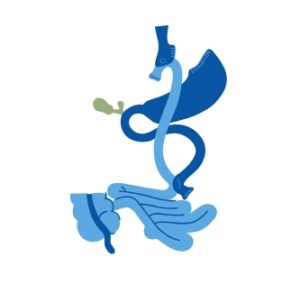
Diagram of Roux-en-Y gastric bypass

Roux-en-Y gastric bypass

  • Small stomach (pouch), with the rest of the stomach left isolated.
  • Two connections: stomach-intestine and the junction of the digestive juices, forming the "Y".
  • Food no longer passes through the first metre and a half of the intestine.
  • More than 25 years of clinical experience.

Point-by-point comparison

AspectSADI-S bypassGastric bypass
Stomach shapeTube (sleeve) with the pylorus preservedSmall 4 × 2 cm pouch
How the stomach worksPhysiological: keeps its entry and exit valvesThe rest of the stomach is left isolated
Number of connectionsOne (duodenum-ileum)Two
Endoscopic access to the stomachYesRemaining stomach isolated
Reduction in ghrelinHigherLower
Malabsorptive powerSlightly higherLower
Absorption of iron, folic acid and B12Lower risk of deficiencyHigher risk; lifelong supplements
Ulcers at the connectionNo gastro-jejunal connection< 3%
Internal herniasRisk minimised3–5%
Feeling of fullnessMore physiologicalIntense and early
Excess weight lost at 5 years85–90%70–85%
Technical complexityHigher: only highly experienced teamsStandard technique
Clinical experienceMore recent techniqueMore than 25 years of literature

Advantages of SADI-S over the classic bypass

  • Better absorption of nutrients such as iron, folic acid and vitamin B12.
  • Lower risk of ulcers at the connection and lower likelihood of internal hernias.
  • A more physiological feeling of fullness and better long-term quality of life.
  • Because the connection is placed below the pylorus, it avoids the reflux of bile into the stomach that occurs with one-anastomosis (mini-gastric) bypass.

Which one is right for me?

No technique is better in absolute terms: the choice is individual and depends on BMI, metabolic profile (diabetes, hypertension, cholesterol), eating habits, the presence of hiatus hernia or reflux, and the assessment of the multidisciplinary team. At the first consultation, the surgeon will explain which one best suits your case.

Is the SADI-S bypass the right operation for you?

Request a personalised preliminary study. We will provide a medical assessment and recommendation with no obligation.

Start my personalised study

Frequently asked questions

What is the SADI-S bypass?

It is the combination of a gastric sleeve with a single-anastomosis duodeno-ileal bypass. The result is a small stomach that still works normally and controlled malabsorption, making it a more physiological, more effective bypass with fewer complications.

How does it differ from traditional gastric bypass?

With SADI-S, the stomach keeps working as it should and keeps its exit valve, and there is only one intestinal connection, located below that valve. This reduces ghrelin to a greater extent, lowers the risk of problems absorbing iron, folic acid and vitamin B12, avoids ulcers at the gastro-jejunal connection and minimises internal hernias. On the other hand, it is technically more complex and its malabsorptive power is slightly greater.

What criteria must I meet to have surgery?
  • BMI over 45 kg/m², or
  • BMI over 40 with metabolic syndrome or an unfavourable metabolic or psychological profile, or
  • Compulsive snacking or frequent, uncontrolled consumption of sweets, or
  • Significant family history of obesity.

You can check whether your profile is suitable in the section What treatment do I need?

I've had a gastric sleeve: can I switch to SADI-S?

Yes. If weight is regained over the years or weight loss has been insufficient, the gastric sleeve can be converted into a SADI-S bypass, as the technique starts precisely from a sleeve. The patient is first reassessed to identify the causes.

Why should it only be performed by an experienced team?

Because it is a more complex technique than traditional gastric bypass. A team with extensive experience in obesity surgery and in this type of intestinal connection is key to safety and results.

How much does the operation cost?

The cost of laparoscopic bypass surgery is €13,200, with financing available for up to 60 months. It includes:

  • Multidisciplinary assessment and preparation with a dietitian and psychologist.
  • Full pre-operative work-up (gastroscopy under sedation, abdominal ultrasound, blood tests, ECG and chest X-ray).
  • Hospital stay with all theatre, ward and medication costs.
  • Surgeons' and anaesthetist's fees. In the unlikely event of a complication, the patient does not pay medical fees (hospital costs are still payable).
  • Telephone access to one of the surgeons and hospital follow-up for up to 30 days.
  • Online nutritional support, patient support group and training workshops for 2 years.
Will I have to take vitamins?

Yes. Because absorption is reduced, vitamin supplements and regular nutritional check-ups are needed. As the stomach is preserved, the risk of iron, folic acid and vitamin B12 deficiency is lower than with gastric bypass.

How long is the recovery?

It is short thanks to the minimally invasive technique: the patient walks within a few hours, drinks fluids on the same day and is discharged in 24–48 hours. They can return to work in 7–15 days, without lifting more than 15 kg, and to physically demanding jobs from 4 weeks.

What can I eat afterwards?

During the first month, a progressive diet is followed: liquid, semi-liquid, purée, soft and normal. After that, a normal, healthy diet in small amounts. All kinds of food are tolerated; too much fat or sugar can cause loose stools.

Why SADI-S and not mini-gastric bypass?

Mini-gastric bypass joins very different structures (the thick wall of the stomach with the small intestine), which encourages ulcers, and places the connection above the stomach's natural valve, causing chronic bile reflux, gastritis and alkaline oesophagitis that are difficult to treat. SADI-S avoids these problems by placing the connection below the pylorus.

Can I put weight back on?

Yes, if your diet is unbalanced. That is why a lasting change in habits, physical activity and follow-up with the multidisciplinary team are key.

What are the risks?

In the immediate post-operative period, complications (thrombosis, embolism, fistula, bleeding) occur in less than 1% of cases and published mortality is below 0.35%. In the medium and long term, its greater malabsorptive power may lead to occasional problems if the diet and supplements are not followed. Most are resolved in expert hands with medical or surgical treatment.

Clínicas Obésitas
Privacy Overview

This website uses cookies so that we can provide you with the best user experience possible. Cookie information is stored in your browser and performs functions such as recognising you when you return to our website and helping our team to understand which sections of the website you find most interesting and useful.